Editorial qualifications
All authors deserve to work with an editor who knows what they’re doing. I’m an advanced professional member of the Chartered Institute of Editing and Proofreading, meaning my experience has been vetted by a knowledgeable editorial industry panel.
Here’s a full list of my qualifications, as well as some of the clients I’ve worked with.
Qualifications
- Copyediting 2: Headway (CIEP)
- Essential Proofreading (The Institute of Publishing)
- Introduction to Fiction Editing (CIEP)
- Copyediting 1: Introduction (CIEP)
- Proofreading 1: Introduction (CIEP)
- BA (Hons) English and Creative Writing
Professional development work
- Trends in the publishing industry (CIEP)
- Editing Sex and Intimacy (Editorial Freelancers Association)
- Guiding Principles for Developmental Editing (Liminal Pages)
- Trauma-Informed Editing (FOLD Academy)
- Comma Press virtual publishing conference 2021
- Book Formatting Using Word Styles (Editors Canada)
- Inclusive Language Series (ACES: The Society for Editing)
- Editing for Young Readers (ACES: The Society for Editing)
- Comics and Graphic Novel Conventions for Proofreaders (Editorial Freelancers Association)

Clients
I love working with authors one-on-one, and regularly work with self-publishing authors and writers who plan to submit traditionally. I’ve also worked with lots of publishing houses over the years, including:
- Audible
- Michael O’Mara Books
- HarperCollins
- Bedford Square Publishers
- Badger Learning
- Storm Publishing
- Chicken House Books (imprint of Scholastic)
- Ebury (imprint of Penguin Random House)
- Writers & Artists (platform for writers run by Bloomsbury)
- Head of Zeus
- Canelo
- Hashtag Press
- Black Library (publishing division of Games Workshop)
- Bookouture (imprint of Hachette UK)
- Thread Books (imprint of Hachette UK)
Editorial writing
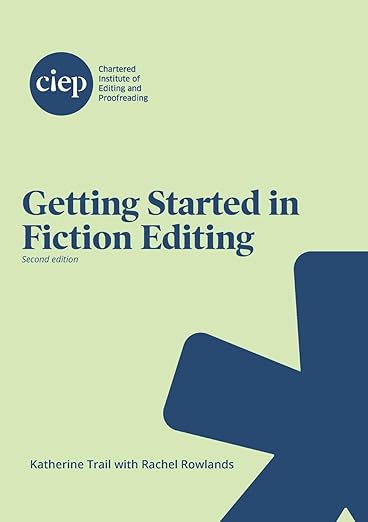
Getting Started in Fiction Editing
I contributed to the guide Getting Started in Fiction Editing, a business book published by The Chartered Institute of Editing and Proofreading, a non-profit promoting excellence in English-language editing.
Fiction editing is an increasingly popular field, but one that can be daunting to a new editor or even an experienced editor who has only ever worked on nonfiction. This guide is aimed at copyeditors, whatever their experience, who want to know more about the nuts and bolts of fiction editing. It will also be useful to those who proofread fiction, to help understand what the editor should have considered.
Getting Started in Fiction Editing explains how to work with both publishers and independent authors and examines how their needs might differ. It also explores the various types of editing that a fiction manuscript might need, as well as what editors need to be aware of, such as continuity, the importance of style sheets and the risks of over-correction. The guide concludes with a list of resources for further reading and a glossary of fiction terms.