
5 ways to outline your book
If you’ve been thinking about writing a novel, you might feel a little daunted or overwhelmed – and that’s where learning to outline a book can help! Writing a book is a monumental task, but putting together an outline means you can break it down into smaller chunks. And planning ahead means you’re less likely to get stuck or lost along the way.
This post contains affiliate links. For more information, see my disclosure here.
Of course, outlining might not be for you – you might prefer to write your book by the seat of your pants, without an outline. Lots of writers do this and come back to refine their draft at a later stage.
But an outline can still be helpful in that case too. Your second draft could benefit from an outline because it will help you plan what to do with it!
I’m focusing on outlining fiction here – so novels – as that’s my area of expertise. There are a wide range of methods to outline a book. Here are some that I highly recommend giving a try.
Save the Cat! beat sheets

A popular book on planning a novel is Save the Cat! Writes a Novel by Jessica Brody. Brody adapted her outlining method from a popular screenwriting book, applying it to novels instead.
The idea is that you use a “beat sheet” – these beat sheets are detailed plans listing every major story beat that will make up your novel from start to finish.
The best part is, Brody suggests a beat sheet for most genres and types of stories. There are beat sheet suggestions for mystery stories, romances, adventure books, supernatural tales, and more. The beat sheets are easy to follow and Brody uses examples from real books to help you understand them. There’s also some excellent advice on ensuring that your protagonist feels well implemented alongside your plot.
The Snowflake method
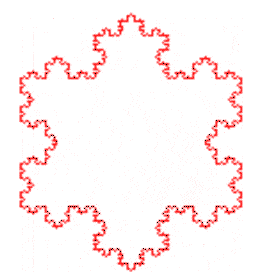
The Snowflake method of outlining was created by Randy Ingermanson – it became very popular during online writing challenges and events, especially for new writers.
The idea behind it is simple. You can outline a book the same way you’d build a complex snowflake: you start with the smallest, most basic parts, and build and layer things until the story takes its full shape.
So the first step in this method is a one-sentence summary of your novel. The next is a full paragraph describing the setup, disasters, and ending. Then you add in character work. And so on, until you have a complete outline of not only the events of your novel but the characters and their deeper motivations and goals, too.
This is a great method for writers who want to outline a book in a way that doesn’t feel too rigid or confined. There’s a lot of flexibility and room for experimentation. That makes it perfect for writers who generally prefer discovery writing.
The full outlining method is online – but there’s also a book with detailed examples of how to apply the method.
The three-act structure
The three-act structure is a method of planning a story by splitting it into three acts. As with Save the Cat, this method is based on a screenwriting technique that is used in many popular movies.
The three acts are the setup, the confrontation, and the resolution. It begin’s with showcasing the protagonist’s world and how this is turned upside down, before digging into the major story problem, how challenges are faced, and how the major story problem is resolved in the end.
The three-act structure is ideal for building a compelling story with a strong sense of cause and effect, where events feel clearly connected. It can also help you to ensure that your story feels well-resolved.
Romancing the Beat

This method is for the romance writers! Romancing the Beat covers creating an outline for a romance book. It’s a short read, making it very easy to digest and apply.
The outlining method, created by Gwen Hayes, suggests splitting your romance book into four parts. It covers the setup phase, the characters falling in love, retreating from love, and then fighting for that love. Within those four parts are smaller subsections.
Romance readers are voracious and have certain expectations when they pick up a romance novel. They’re going to be looking for certain beats. For that reason, it’s a fantastic resource to ensure you’re writing a book that’s in line with the genre – and one readers will love!
The Hero’s Journey

The Hero’s Journey concept was made popular by Joseph Campbell, who raised the idea that all mythic tales are variations of a single great story.
The pattern he noticed was known as the Hero’s Journey, and was documented in his book, The Hero with a Thousand Faces. It has been applied by a wide range of writers ever since he coined the term.
The Hero’s Journey begins with a hero who is called to adventure. Over the course of the story, he meets mentors and aids, goes through challenges, and undergoes a transformation. In the end, the hero returns home – but they aren’t the same as when they set out.
This method of building an outline is perfect for fantasy, sci-fi and adventure stories as it allows you to create a strong story with an equally strong and compelling protagonist that the reader can root for. It’s been used in all sorts of great speculative fiction tales, including The Lion, the Witch, and the Wardrobe by C.S. Lewis and The Hobbit by J.R. Tolkien.
And there you have it! Five of my recommended methods for creating an outline for your novel. Have you tried any of these – or are you planning to?